 Parth
on

Parth Shah
Registered Valuer | CA | CPA | 15+ Years of Experience
Parth Shah is the Founder and Team Leader of the company, bringing extensive expertise in business valuation and financial advisory.
B2B SaaS valuation in India is driven by the quality of recurring revenue: how much ARR you have, how fast it grows, and how much of it customers keep and expand each year. B2C startups are valued on a different question altogether: does each customer make money after you pay to acquire, serve and retain them?
That is why two startups with the same ₹12 Cr revenue can land at valuations three or four times apart. The revenue number is identical. What sits underneath it is not.
This guide explains which metrics investors and valuers actually weigh for each model, how the methods differ, and where founders most often get the number wrong. At My Valuation, we see this split every week, because SaaS makes up the largest share of the startups we value.
Key Takeaways
- B2B SaaS valuation in India is driven mainly by ARR, ARR growth and net revenue retention, usually expressed as a multiple of ARR.
- B2C startups are valued on contribution margin, cohort retention and LTV to CAC, not on headline revenue or user counts.
- GMV is not revenue. For a marketplace, the valuation base is the net take the company keeps, not the gross value of goods sold.
- India-focused SaaS usually earns a lower multiple than SaaS selling to global customers, because contract sizes and pricing power are smaller.
- A multiple agreed with an investor still needs a Registered Valuer report using a recognised method before an unlisted company can make a preferential allotment.
- Hybrid and B2B2C models should have each revenue stream measured on its own metrics before the parts are added up.
What Makes B2B SaaS and B2C Startup Valuation So Different?
The core difference is how predictable the next rupee of revenue is. A B2B SaaS company signs annual or multi-year contracts with businesses, so most of next year’s revenue is already on the books. A B2C startup has to win most of its revenue again, customer by customer, order by order.
That one difference changes everything downstream. Predictable revenue can be valued on a multiple because buyers trust it will repeat. Transactional revenue has to prove, through unit economics, that it repeats profitably.
Customer concentration also works in opposite directions. A SaaS company may have 80 customers, so losing one large account hurts. A consumer brand may have 2 lakh customers, so no single customer matters, but the cost of finding the next lakh matters a great deal.
Finally, cost structures differ. Software has high gross margins (revenue left after the direct cost of delivering the product) because serving one more customer costs very little. Physical consumer products and delivery-led services carry real costs on every order, so margin has to be earned after logistics, returns and discounts.
Which Metrics Drive B2B SaaS Valuation in India?
Five metrics carry most of the weight in a SaaS valuation. Investors look at them together, because a strong number in one can hide a weak number in another.
ARR and ARR growth
Annual Recurring Revenue (ARR) is the yearly value of active subscription contracts, usually monthly recurring revenue multiplied by 12. It is the base to which a valuation multiple is applied. One-time setup fees, implementation charges and consulting income are not ARR.
Growth decides the size of the multiple. A company growing ARR at 80% a year will command a much higher multiple than one growing at 25%, because the same ARR becomes far more revenue within three years.
Net revenue retention and churn
Net revenue retention (NRR) measures how much revenue you keep from last year’s customers after upgrades, downgrades and cancellations. An NRR above 100% means existing customers alone grow your revenue, even with zero new sales.
Investors treat NRR as the clearest sign of product value. A SaaS company with 120% NRR and modest new sales is often worth more than one with heavy new sales but 85% NRR, because the second company is refilling a leaking bucket.
Gross margin and CAC payback
Healthy SaaS gross margins usually sit in the 70% to 85% range. Margins much lower than that often signal heavy hosting costs or a large services component hiding inside the subscription.
CAC payback is the number of months of gross profit needed to recover the cost of acquiring a customer. Shorter payback means growth needs less outside capital, which supports a higher valuation.
Rule of 40 and burn multiple
The Rule of 40 adds revenue growth rate and profit margin. A score of 40 or more suggests a healthy balance between growth and efficiency. A company growing 60% with a 25% operating loss scores 35.
The burn multiple divides net cash burned by net new ARR added in the same period. A burn multiple below 1.5 means the company is buying growth efficiently. Above 3, investors start asking hard questions.
Why global vs domestic customers changes the multiple
Indian SaaS companies selling to US or European businesses usually earn multiples closer to global benchmarks. They charge higher contract values in dollars, and their buyers are used to paying for software.
SaaS built mainly for Indian SMBs often faces smaller annual contract values and higher price sensitivity. The metrics may look equally strong in percentage terms, but a valuer will usually apply a lower multiple to reflect the smaller revenue pool per customer.
Which Metrics Drive B2C Startup Valuation in India?
B2C startup valuation in India comes down to one question: is each customer profitable over their life with the brand? Five metrics answer it.
GMV vs net revenue
Gross merchandise value (GMV) is the total value of goods sold through a platform. For a marketplace, the company only earns its commission or take rate on that GMV. A platform with ₹100 Cr GMV and a 12% take rate has ₹12 Cr of revenue, and that ₹12 Cr is what gets valued.
For D2C brands, net revenue should also strip out returns, cancellations, discounts and GST. Founders who quote gross sales overstate their base before the conversation even starts.
Contribution margin (CM1, CM2, CM3)
Contribution margin is profit per order after variable costs, and investors read it in layers:
- CM1: net revenue minus cost of goods
- CM2: CM1 minus fulfilment, shipping, packaging and payment gateway costs
- CM3: CM2 minus performance marketing spend
A brand with a 60% CM1 can still lose money on every order once delivery and ads are paid. CM2 and CM3 show whether growth creates value or just consumes cash.
Cohort retention and repeat rate
A cohort is the group of customers acquired in the same month. Tracking what share of each cohort buys again after 3, 6 and 12 months shows whether the brand builds loyalty or keeps buying new customers.
Rising repeat rates in newer cohorts are one of the strongest signals a consumer business can show an investor. Falling rates suggest that growth is being bought rather than earned.
LTV to CAC and paid vs organic mix
Customer lifetime value (LTV) is the contribution a customer generates over their relationship with you. Customer acquisition cost (CAC) is what you spend to win them. A ratio of 3 to 1 or better is the usual comfort zone.
The mix matters too. A blended CAC that includes free organic and referral customers can hide an expensive paid CAC. Valuers ask for the paid-only figure, because that is the cost of the next unit of growth.
Burn and path to profitability
Consumer businesses need a believable route to positive contribution after marketing at scale. Investors in Indian consumer companies have grown far more focused on profitability and cash burn than they were during the 2021 funding peak. A clear timeline to CM3 breakeven now carries real weight.
SaaS Valuation Comparison: B2B SaaS vs B2C Side by Side (H2)
This saas valuation comparison puts the two models next to each other, so you can see which number drives value in each.
| Factor | B2B SaaS | B2C startup |
| Valuation base | ARR | Net revenue or net take |
| Main method | ARR multiple, backed by DCF | Revenue multiple, backed by unit-economics DCF |
| Growth signal | ARR growth rate | Revenue growth with stable margins |
| Retention metric | Net revenue retention | Cohort repeat rate |
| Margin metric | Gross margin (70% to 85%) | CM2 and CM3 |
| Efficiency metric | CAC payback, burn multiple | Paid LTV to CAC |
| Key risk | Churn, customer concentration | Rising CAC, weak repeat |
| Typical multiple | Higher | Lower, unless margins are proven |
Which Valuation Methods Work Best for Each Model?
For revenue-stage B2B SaaS, the ARR multiple method is the starting point. The valuer picks a multiple from comparable listed SaaS companies and recent private deals, then adjusts it for growth, NRR, margin and customer geography.
A discounted cash flow (DCF) model, which values a business by projecting its future cash flows and discounting them to today, usually sits alongside as a cross-check. SaaS lends itself to DCF because recurring revenue makes forecasts more reliable.
For B2C startups, a revenue multiple on net revenue is common, but the multiple depends heavily on contribution margins. A DCF built bottom-up from cohorts, order values and CAC is often more persuasive than a multiple alone, because it shows exactly how growth turns into cash.
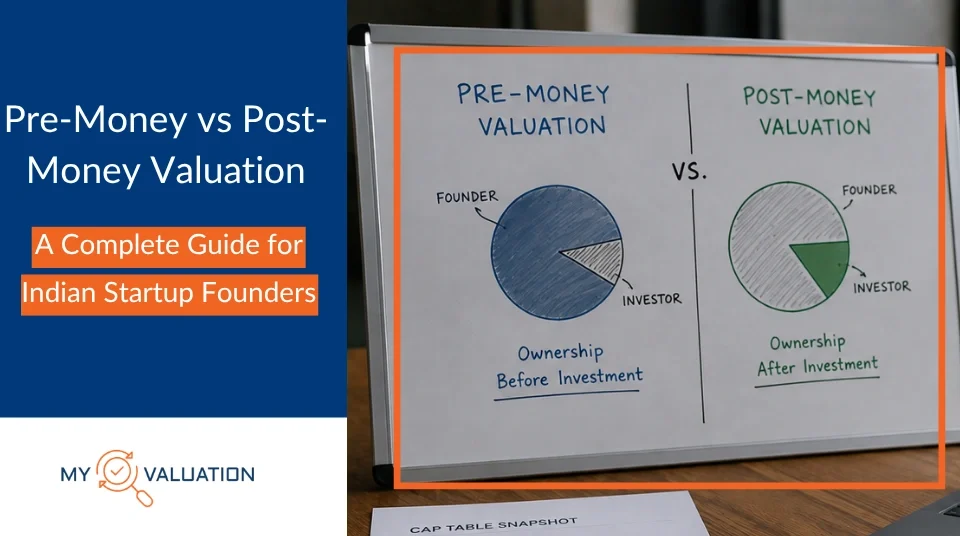
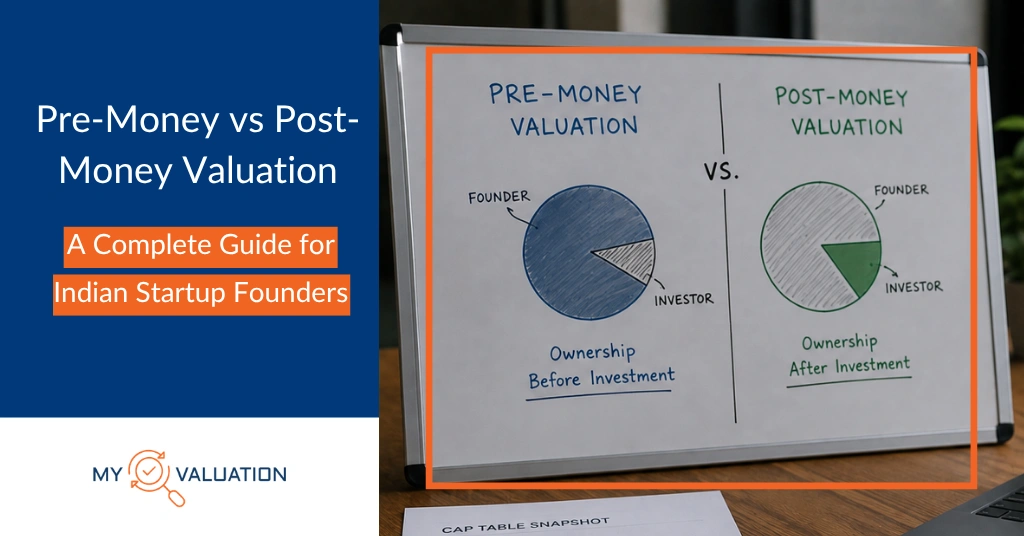
For both models at seed stage, the VC method works backwards from a likely exit value and the investor’s target return. Whatever method you use, the investor’s number also sets your dilution, so it helps to understand how pre-money and post-money valuation work before you negotiate.
How Do the Numbers Play Out? A Worked Example
Take two startups, each reporting ₹12 Cr of revenue for the year. The figures below are illustrative, not real companies.
Company A: a Bengaluru-based HR software company (B2B SaaS)
- ARR: ₹12 Cr, growing 70% a year
- Net revenue retention: 115%
- Gross margin: 78%
- About 80% of ARR from US customers
- CAC payback: 14 months; burn multiple: 1.4
Suppose comparable listed and recently funded SaaS businesses point to a range of 7x to 10x ARR. Strong NRR and global customers justify the middle of that range. At 8x, the enterprise value comes to about ₹96 Cr.
Company B: a Mumbai-based personal care brand (D2C)
- Net revenue: ₹12 Cr (from about ₹16 Cr gross sales, after returns and discounts)
- Revenue growth: 60% a year
- CM1: 60%; CM2: 8% after fulfilment and delivery costs
- 12-month repeat rate: 28%
- 70% of new customers acquired through paid ads
With thin CM2 and modest repeat, comparable consumer deals might support 2x to 3x net revenue. At 2.5x, the enterprise value comes to about ₹30 Cr, less than a third of Company A, on the same revenue.
What would move Company B’s number?
Revenue growth would not be the main lever. If Company B lifted CM2 to 18% and its 12-month repeat rate to 40%, a valuer could reasonably move the multiple toward 4x. That takes the value to about ₹48 Cr without adding a rupee of revenue.
The lesson is simple. SaaS founders raise value by growing ARR and protecting retention. Consumer founders raise value by fixing unit economics first, then scaling.
Want your ARR or unit economics turned into a number investors and auditors both accept?
We build valuation models that match your business model: ARR multiples and retention analysis for SaaS, cohort and contribution-margin DCFs for consumer brands. You get a signed, audit-ready report from an IBBI Registered Valuer, typically within 5 to 7 business days of receiving complete documents.
Explore our startup valuation servicesWhat About Hybrid and B2B2C Models?
Many Indian startups do not fit cleanly into either box. A fintech platform may charge banks a SaaS fee and also earn a per-transaction cut from consumers. A D2C brand may sell a subscription box alongside one-off orders.
The right approach is to split revenue by stream and value each on its own metrics. Subscription revenue gets judged on retention and margin. Transactional revenue gets judged on contribution and repeat behaviour. Applying a SaaS multiple to the whole business overstates value, and investors will spot it in diligence. Our guide on how fintech startups are valued covers one of the most common hybrid cases in detail.
Do Indian Tax and FEMA Rules Care About Your ARR Multiple?
Not directly. Investors negotiate on ARR or revenue multiples, but Indian law asks for a fair value backed by a recognised method and signed by the right professional. The investor’s multiple is an input, not the legal answer.
Three rules matter most when the round closes:
- Companies Act, 2013: an unlisted company issuing shares on a preferential basis under Section 62(1)(c) must price them at no less than the value in a Registered Valuer’s report, under Rule 13 of the Companies (Share Capital and Debentures) Rules, 2014.
- FEMA: shares issued to a foreign investor cannot be priced below fair value worked out using an internationally accepted pricing methodology, certified by a CA, a SEBI-registered merchant banker or a practising cost accountant. Our page on FEMA pricing rules for foreign investment explains the floor in detail.
- Income tax: from 1 April 2026, the Income-tax Act, 2025 and the Income-tax Rules, 2026 apply, and the old Rule 11UA framework now sits in Rule 57. For transfers of unquoted equity shares, Rule 57 uses a net asset formula that does not see your ARR multiple at all.
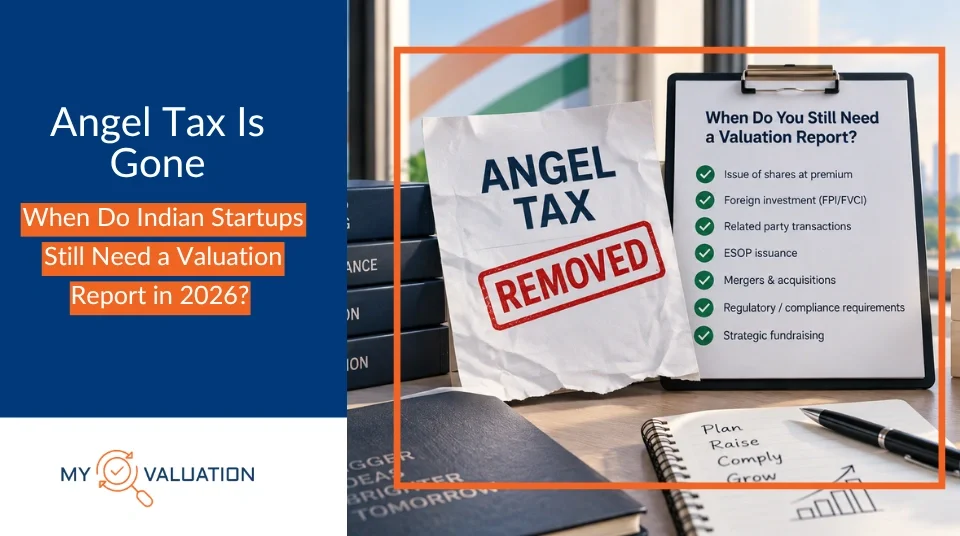
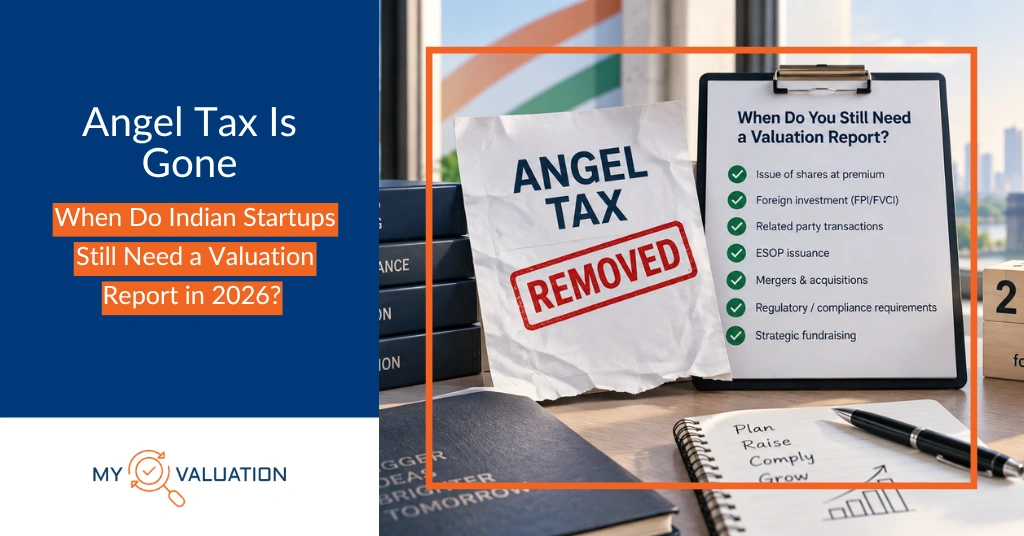
The angel tax provision no longer applies to share issues, but several other triggers still require a formal report. This explainer on when a startup still needs a valuation report sets them out.
Common Mistakes Founders Make When Valuing B2B SaaS and B2C Startups
These five errors account for most of the valuation pushback we see from investors and auditors:
- Counting services income as ARR. Implementation fees, custom development and annual maintenance billed separately are not recurring software revenue. Including them inflates the base and the multiple.
- Using GMV as revenue. Marketplaces that present GMV as the top line lose credibility in the first diligence call.
- Applying global SaaS multiples to domestic SaaS. A tool sold mainly to Indian SMBs rarely earns the multiple of a US-facing peer, even with similar growth.
- Quoting blended CAC. Mixing organic and paid customers makes acquisition look cheaper than it is. Investors will rebuild the paid-only number anyway.
- Ignoring cohort decay. A projection that assumes every cohort repeats like your best one will not survive scrutiny. Model each cohort as it actually behaves.
Is your financial model making any of these mistakes?
We review and rebuild startup financial models so the ARR bridge, cohort tables and CAC figures hold up in investor diligence. You get a clean three-statement model with scenario planning, ready to sit behind your valuation and your pitch deck.
Get an investor-ready financial modelConclusion: Getting B2B SaaS Valuation in India and B2C Valuation Right
B2B SaaS valuation in India rests on recurring revenue quality: ARR, growth, retention and margin. B2C valuation rests on whether each customer is profitable after acquisition and delivery costs. Same revenue, different questions, very different answers.
Before your next round, act on these four points:
- Clean your revenue base: strip services income out of ARR, and strip GMV, returns and discounts out of consumer revenue.
- Lead with the metric your model is judged on: NRR and ARR growth for SaaS, CM2, CM3 and cohort repeat for consumer brands.
- Split hybrid revenue streams and benchmark each against the right peers before agreeing a multiple.
- Get the Registered Valuer report dated before allotment, so the agreed price is backed by a recognised method on paper.
Know which numbers your business model is really judged on, and the valuation conversation stops being a negotiation over adjectives.
Raising your next round as a SaaS or consumer founder?
Book a free consultation with our valuation team. We will look at your metrics, tell you which method fits your model, and explain which reports your round needs under the Companies Act, FEMA and income tax rules.
Book your free valuation consultationAbout the Author
Parth Shah, IBBI Registered Valuer (SFA), US CPA, FCA
Parth Shah is the founder of My Valuation and an IBBI Registered Valuer for Securities or Financial Assets (Reg. No. IBBI/RV/06/2020/13086). He values SaaS, consumer and technology startups for fundraising, ESOP, FEMA and Companies Act purposes, and
Frequently Asked Questions
1. What is a good ARR multiple for an Indian SaaS company?
There is no single number. Multiples depend on ARR growth, net revenue retention, gross margin and whether customers are global or domestic. Fast-growing SaaS with strong retention and global customers earns multiples well above slower, India-focused peers.
2. Is GMV used to value B2C startups?
GMV shows scale, but it is not the valuation base. For marketplaces, valuers use net revenue, meaning the commission or take rate the company keeps. For D2C brands, they use net revenue after returns, discounts and GST.
3. Why do B2B SaaS startups often get higher valuations than B2C startups?
SaaS revenue is contracted and repeats with little extra cost, so buyers trust it more. Consumer revenue must be won again through marketing and carries delivery costs on each order. Higher predictability and margins earn SaaS a higher multiple.
4. Can a pre-revenue SaaS startup be valued?
Yes. With no ARR yet, valuers use methods such as the Scorecard method, the Berkus method or the VC method. These weigh team strength, product readiness, market size and pilot traction instead of revenue.
5. What is net revenue retention in SaaS?
Net revenue retention measures revenue kept from existing customers over a year, after upgrades, downgrades and cancellations. Above 100% means existing customers grow revenue on their own. It is one of the strongest drivers of a SaaS multiple.
6. What LTV to CAC ratio do investors expect from a consumer startup?
A ratio of 3 to 1 or better is the usual benchmark. Investors prefer to see it calculated with paid-only CAC and contribution-based LTV, because blended figures often overstate efficiency.
7. Does a valuation report need to show the ARR multiple the investor agreed to?
The report must reach a fair value through a recognised method, and it can use an ARR or revenue multiple as one approach. For unlisted preferential allotments, the issue price cannot be lower than the Registered Valuer’s value.
8. How should a B2B2C startup be valued?
Split revenue into its business and consumer streams, then value each on its own metrics. Subscription revenue is judged on retention and margin, transactional revenue on contribution and repeat rate. The parts are then combined into one value.